
WEST TEXAS WINDS
Spring Recital
Tuesday, March 17, 2026 | 7:30 pm
Rea-Greathouse Recital Hall at WNPAC
Serenade
Karl Pilss (1902-1979)
At a time when western art music was exploring the use of recorded sound, synthesized electronic instruments, and the birth of Minimalism, the Romantic-influenced 1967 Serenade of Karl Pilss was sadly overshadowed and drowned out by the din of war and technology.
Though a native of Austria, Pilss’s style is an outgrowth of German Romanticism, influenced heavily by composer Richard Strauss. The intervening explosion of Expressionism, Modernism, and intensely dissonant atonal musical language of the Early to Mid-20th Century seem to have had little impact on Pilss. This leaves his music with an anachronistic flavor, making his work sound as though it were composed 50 or 60 years previously. Even the title of this piece, “Serenade,” is an indication that Pilss is hearkening back to an earlier time – to the many wind serenades of Mozart and to Dvořák’s famous example – rather than titling the piece with the more modern convention of the simple yet sterile “Quintet.” The first movement of the Serenade bears the indication “Heiter bewegt” (Cheerily emotional). Placid and pastoral in general, this movement is full of warbling bird-calls and Romantic filigree, led primarily by the voice of the flute.
The second movement, labeled “Ruhig” (Calm), provides a more serious contrast in four sections. The first and third sections are led by an expressive oboe solo, while the second and fourth are ensemble-driven and slightly more emotional.
The third movement is a whirling scherzo with only the instruction “Schnell” (Fast). The opening and closing gravitate toward a playful minor mode with chromatic embellishments, while the central development is a bit more cheerful and flowing.
The final movement begins with a slow introduction: “Breit” (Broad), followed by a brisk, contrapuntal finale labeled “Sehr lebendig” (Very lively). The colors of the introduction are deep, yet vibrant. The flute is almost entirely absent until late in the introduction, when it makes increasingly involved statements drawn from what is to come. After a rhapsodic quasi-cadenza, the flute leads the group into the exposition of the finale. Indeed very lively and full of colorful, sinuous chromatic passage-work, the movement functions as a traditional yet very satisfying close to Pilss’s Serenade.
Wind Quintet in F Major, Op.81
George Onslow (1784-1853)
Perhaps no composer more than George Onslow illustrates the fickleness of fame. Onslow was born and lived his entire life in France, the son of an English father and French mother. His chamber music, during his own lifetime and up to the end of the 19th century, was held in the highest regard, particularly in Germany, Austria, and England, where he was regularly placed in the front rank of composers. His work was admired by both Beethoven and Schubert, while Schumann, perhaps the foremost music critic during the first part of the 19th century, regarded Onslow’s chamber music on par with that of Mozart, Haydn, and Beethoven. Mendelssohn was also of this opinion. However, after the First World War, his music, along with that of so many other fine composers, fell into oblivion. And up until 1984, the bicentennial of his birth, he remained virtually unknown.
One is almost a little surprised that Onslow, a pianist and cellist, would write a wind quintet and quite a good one. But one should remember that Onslow's teacher was Anton Reicha, the man who virtually invented the modern wind quintet. His Quintet – written in 1850 when he was a seasoned 66 years old – shows youth and playfulness. The opening Allegro non troppo begins with a formal introduction. The charming main theme is presented in a very plastic fashion. The second movement is a light and playful Scherzo. The melody is cleverly passed from voice to voice. The lazy trio section provides good contrast. The oboe solo which begins the following Larghetto strikes a somber note. There is a certain Handel-like quality to this formal music. The finale, Allegro spirituoso, is a lively rondo.
-Notes by Edition Silvertrust
Quintet No. 1 for Winds
Endre Szervánszky (1911-1977)
Hungarian composer Endre Szervánszky began his musical career as a clarinetist. After spending some time performing with various orchestras Szervánszky returned to the Budapest Academy of Music to study composition. He was greatly influenced by fellow Hungarian composers Bartók and Kodály. Szervánszky’s published work spans almost 40 years across the middle of the 20th Century, and includes pieces for clarinet, flute, orchestra, chamber music (including two wind quintets), piano, and choral works. He is one of the only composers (if not the only) to be awarded as ”Righteous among the Nations.” This was an award given by the State of Israel to non-Jews for risking their own lives to help Jews escape from the Nazis in World War II. Szervánszky’s musical style ranges from Hungarian folk-influenced music to pure serialism, though his Quintet No. 1 for Winds represents the former.
The first movement of the quintet, Adagio-Allegro moderato, begins with a slow, quiet introduction before the main theme is stated by the oboe. Throughout the first movement, Szervánszky uses the inverted dotted rhythm (a short note followed by a long note) that is often associated with Hungarian music. The second movement, Allegro scherzoso, opens with a fast, virtuosic gypsy-like dance characterized by energetic swirls of sixteenth-notes and percussive accompaniment. A softer, smoother Trio section in triple time provides a vibrant contrast before the opening material returns to finish the movement. Some of the most beautiful writing for the woodwind quintet is found in the third movement, Andante. It opens with a soft, simple tune played by the clarinet, establishing the movement’s tender character. The music builds to a passionate climax before relaxing and returning to the opening aesthetic. The final movement, Allegro vivace, is another dance movement. It is full of energy with driving eighth notes throughout, Hungarian folk tunes, and characteristic flourishes in this exciting finale.
-
Lyndsay Eiben
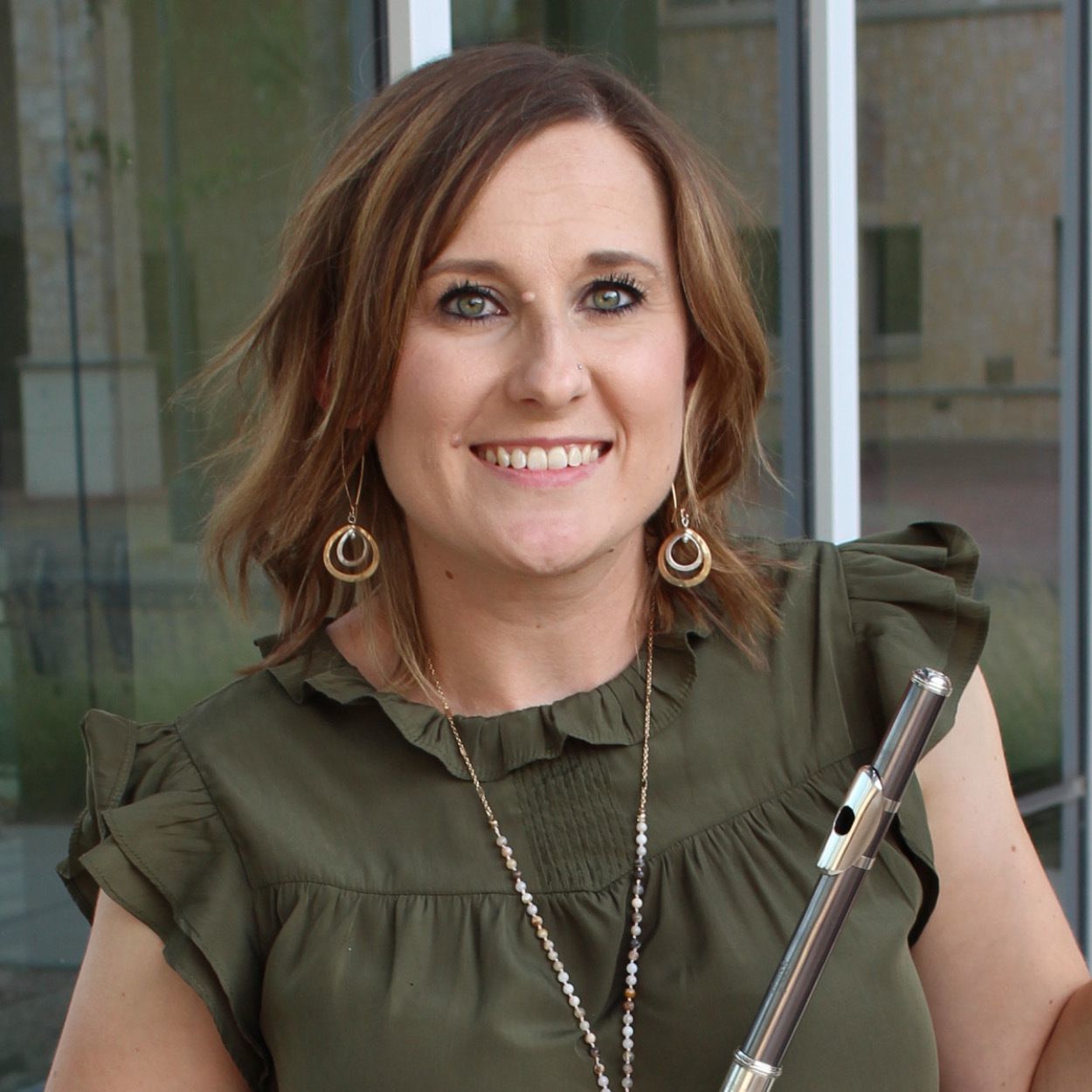
Dr. Lyndsay Eiben, flute, is the principal flute with the West Texas Symphony.
As a native of Odessa, Lyndsay has performed as a substitute flutist with the WTS for many years with her first appointment being while she was in high school.
Lyndsay studied music at West Texas A&M University where she received a Bachelor of Music Performance in 2008 and a Master of Music Performance in 2010. During her tenure at WTAMU, Lyndsay was Associate Principal of the Amarillo Symphony, Amarillo Opera and performed with the Amarillo Little Theatre. She also worked as a private flute instructor for the Canyon and Randall County Independent School Districts. In 2010, Lyndsay was accepted into the University of Cincinnati College-Conservatory of Music to pursue a doctorate in music. While in Ohio, Lyndsay performed with many professional groups such as Cincinnati Landmark Productions, the Showboat Majestic Theater, and the Covedale Center for Performing Arts. Lyndsay has also been a finalist for national flute competitions such as Myrna Brown and the National Flute Association Young Artist competition.
Lyndsay moved back to Odessa in August of 2013 to pursue a career in teaching band. She spent ten years teaching in ECISD at both Nimitz Middle School and Permian High School. Lyndsay’s students have earned admission into the 6A TMEA All-State Bands and have earned superior ratings at solo and ensemble competitions. Lyndsay serves as Director of Bands, Flute Professor, and Director of Music Education at the University of Texas Permian Basin. She holds professional memberships in the Texas Music Educators Association, Texas Bandmasters Association, and the National Flute Association. -
Caryn Crutchfield
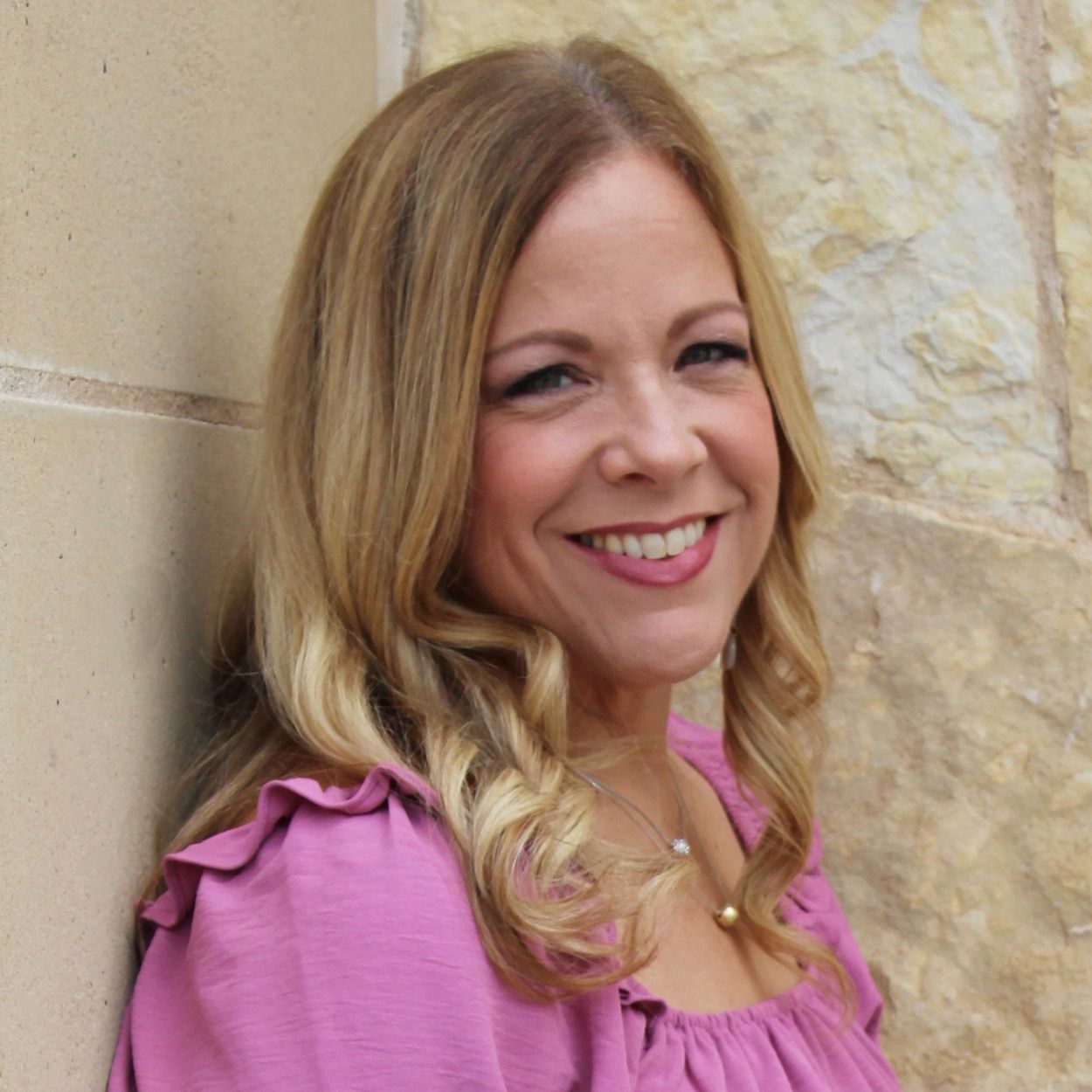
Caryn Crutchfield, oboe, is beginning her thirtieth season with the West Texas Symphony.
She earned both her Bachelor and Master of Music degrees in Oboe Performance from West Texas A&M University in Canyon, TX, where she studied under Robert Krause. Caryn had the honor of serving as the guest soloist with the West Texas Symphony in 2012 and 2021. She has performed three times at the Texas Music Educators’ Association Convention and twice with the WTAMU Director’s Band at the Texas Bandmasters’ Association Convention. Additionally she serves on the Alumni Board for WTAMU and the WTAMU Band Alumni Board. In addition to her symphonic work, she regularly plays as a member of the West Texas Winds woodwind quintet.
In August 2024, Caryn assumed the position of the Fine Arts Coordinator for Midland ISD. She also teaches at The University of Texas at Permian Basin and the West Texas A&M Band Camp. Caryn offers private lessons to students across the Permian Basin and runs a successful reed-making business. She is married to Kevin and has three children.
-
Chris Chance
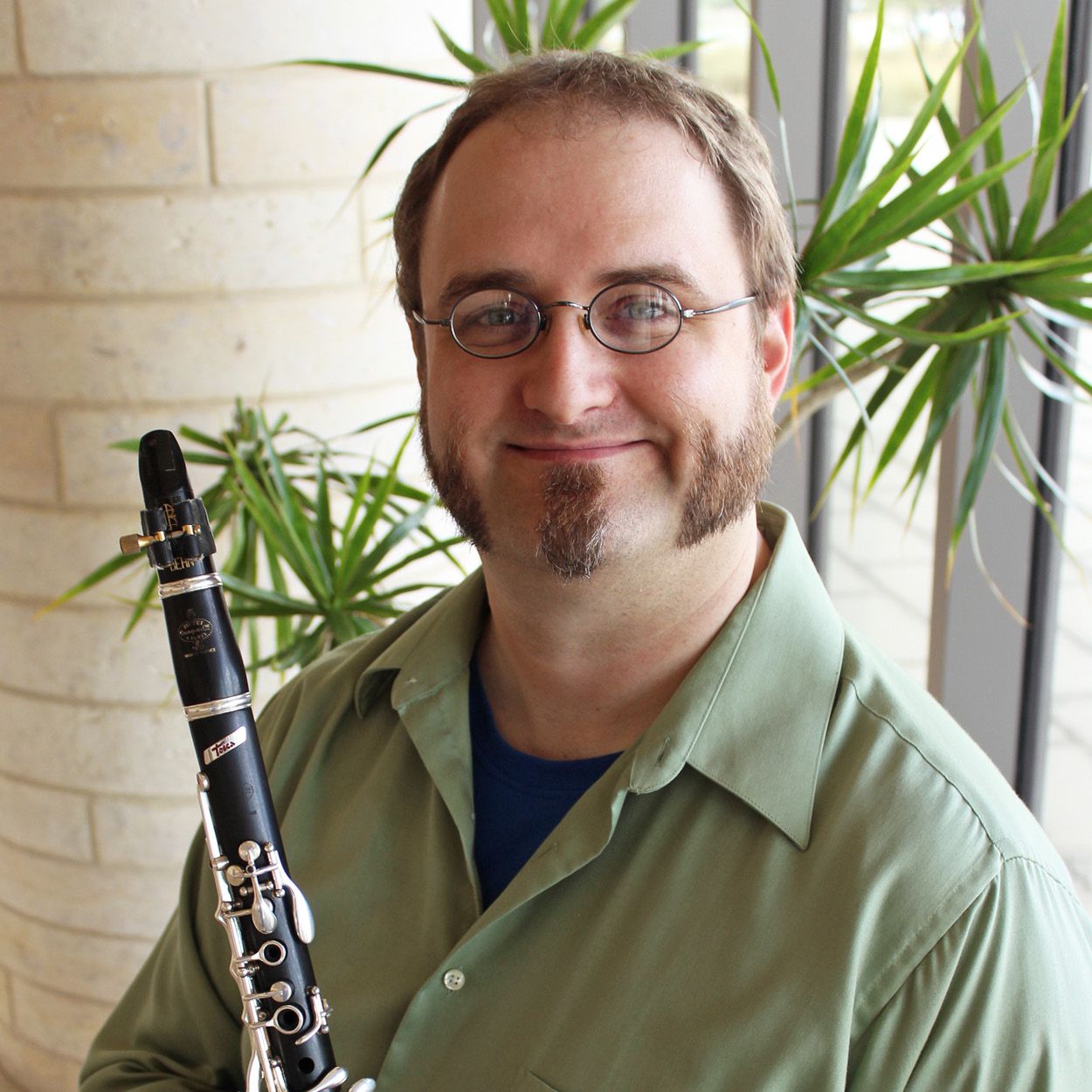
Chris Chance enjoys a varied performing career as an orchestral clarinetist, chamber musician, and concert soloist.
He is currently Principal Clarinet of the West Texas Symphony, Principal Clarinet of the Missouri Symphony Orchestra, clarinetist of the West Texas Winds woodwind quintet, and performs often with the New Mexico Philharmonic. Chris has performed with other orchestras across North America, including Arizona Opera, Ohio Light Opera, Columbus Indiana Philharmonic, Lubbock Symphony, and the Orquesta Sinfónica UANL of Monterrey, Mexico. In addition to live performance, he has also worked as a recording studio musician for the Hal Leonard Corporation.
Chris received a Bachelor of Music degree, a Performer Diploma, and the Performer's Certificate from the Indiana University Jacobs School of Music. -
Philip Hill
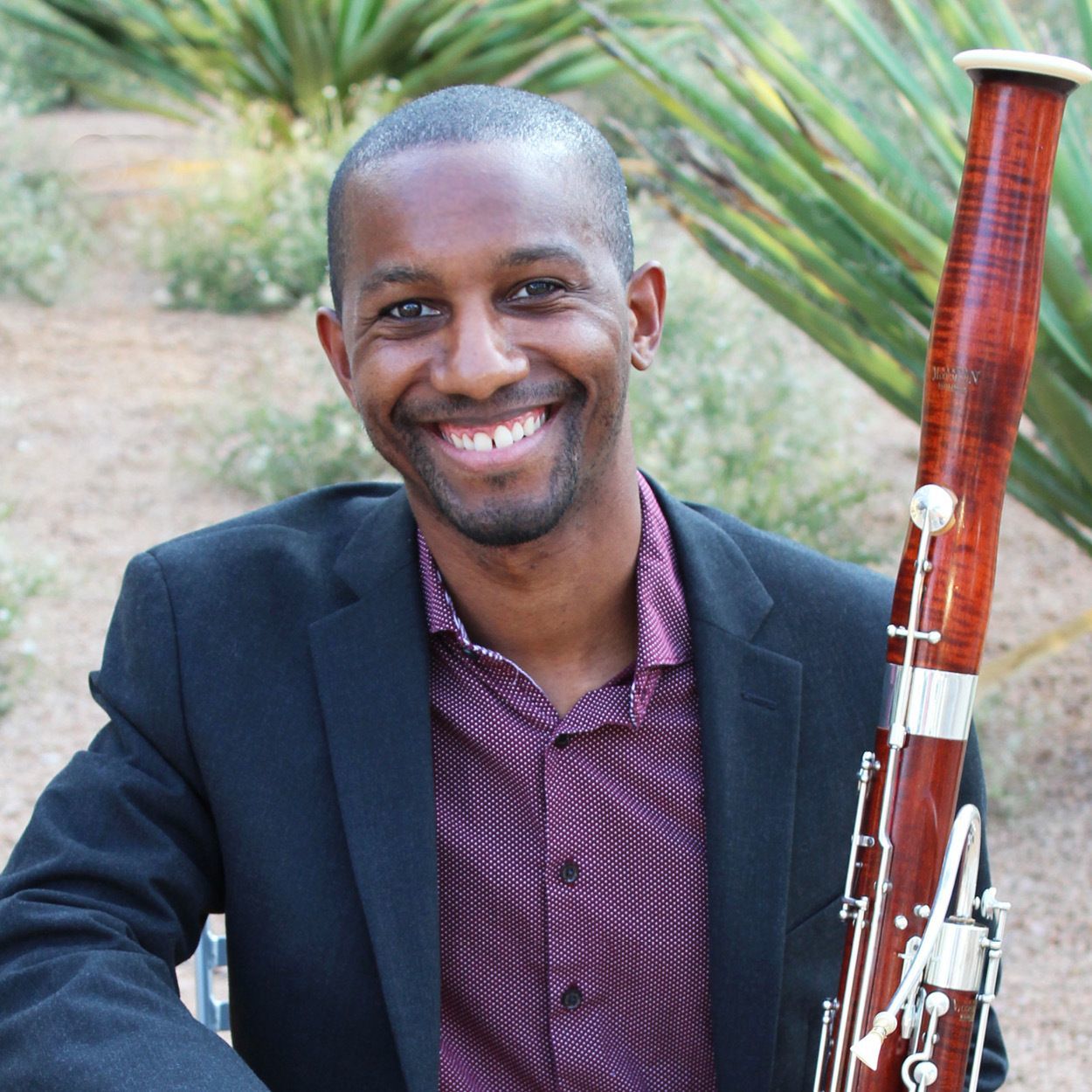
Philip Hill is Principal Bassoon of the West Texas Symphony and Bassoonist of West Texas Winds woodwind quintet. He earned his Master’s degree in Music Performance at the University of Arizona. During his time at UArizona, he studied with William Dietz, and he was bassoonist in the Fred Fox Graduate Wind Quintet and the Opera and Theater program. He earned his Bachelor’s degree in Music Education at East Carolina University. There he studied the bassoon under Christopher Ulffers. He performed at times with the ECU Opera, which is known for performing a wide variety of works from the standards of Mozart to world premieres. As part of the North Carolina New Music Initiative, Philip participated in many premieres and new music projects. Most notable is his performance in the world premiere and recording of Travis Alford’s Loose Strands for chamber wind ensemble. He also made an appearance with the North Carolina Symphony. Philip toured Europe in 2010 as part of the Virginia Ambassadors of Music, then returned to Europe in 2017 as a member of the Prague Summer Nights Festival Orchestra. Philip has also performed with the Bay View Chamber Music Festival and Opera in The Ozarks Orchestra. He was a featured soloist with the West Texas Symphony in 2023, performing Weber's Bassoon Concerto in F Major, Op. 75.
Along with his performance history, Philip has been an active educator in his various residences across the country. He has had countless private students in the Permian Basin, North Carolina, and Arizona, and was a resident artist at the University of Idaho, Youth Orchestras of Lubbock, and Midland Montessori School. He was an adjunct faculty member at the University of Texas Permian Basin for six years, teaching bassoon and chamber music. His YouTube page, @Bassoonatlarge, includes tutorials on reed making. Finally, he has been a frequent clinician for
auditions, rehearsals, and masterclasses, and has hosted masterclasses for TMEA audition preparation with the help of his great colleagues in the West Texas Symphony, Cassatt in the Basin, and other guest artists across the country.
Philip spends his free time cooking, playing frisbee, and doing anything related to soccer. He is a Financial Services Certified Professional® and helps businesses and families with insurance, investments, and succession. -
Sonja K. Millichamp
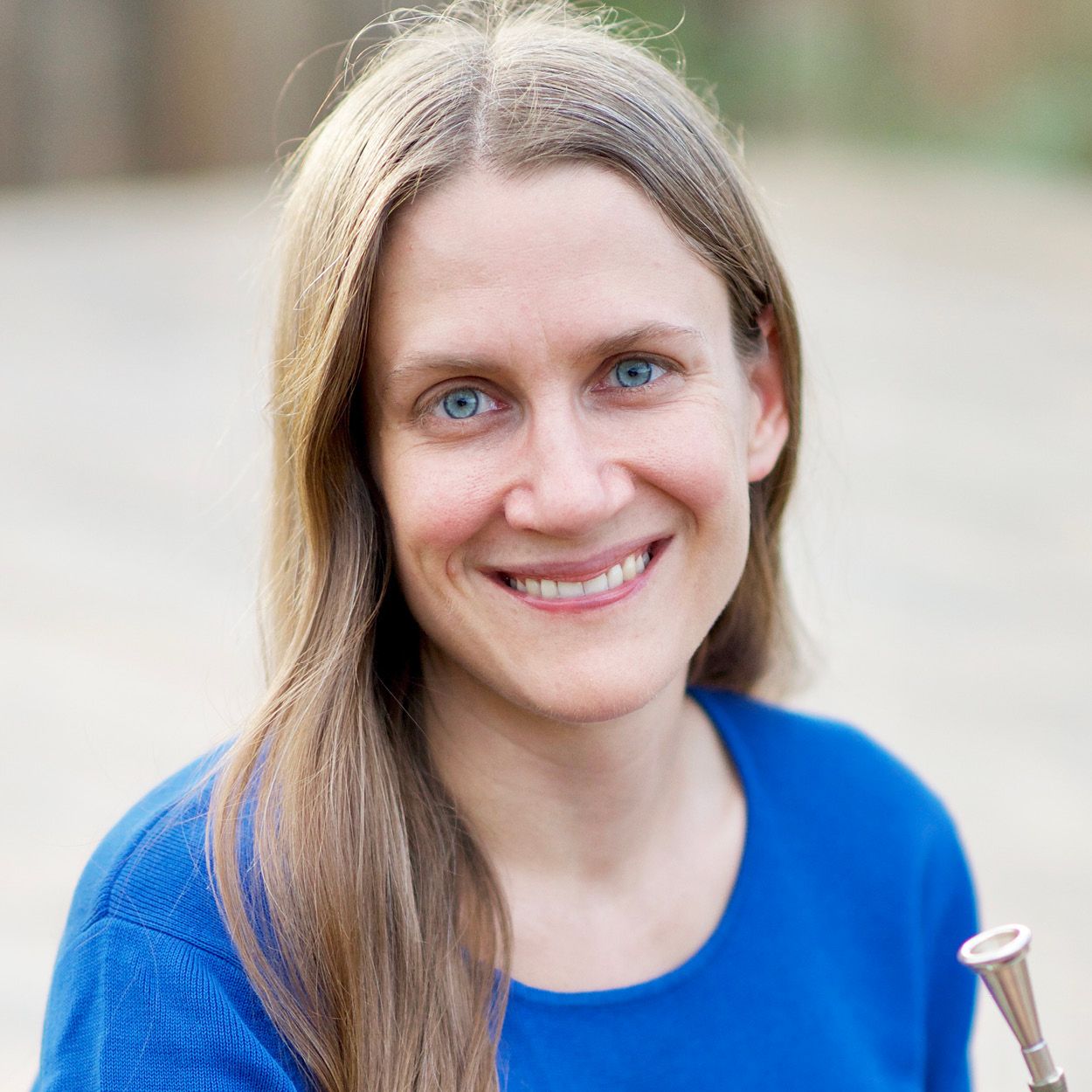
Sonja K. Millichamp earned her Bachelor’s degree in horn performance from the Cleveland Institute of Music and her Master’s degree in music from the University of Illinois at Urbana-Champaign. During the summers she studied at the National Orchestral Institute in College Park, Maryland, and at the Pacific Music Festival in
Sapporo, Japan. Prior to moving to West Texas, Sonja spent six years as the horn professor at Millikin University in Decatur, Illinois, where she also performed with the faculty woodwind quintet and served as principal horn of the Millikin-Decatur Symphony Orchestra. She was also third horn of the Champaign-Urbana Symphony, a member of the Prairie Ensemble, and spent several summers playing principal horn for Opera in the Ozarks. Other ensembles with which she has performed include the Abilene Philharmonic, the Amarillo, Arkansas, Illinois, and Peoria Symphonies, and the Glimmerglass Festival.
Sonja is currently co-principal horn of the West Texas Symphony, hornist of its wind quintet, the West Texas Winds, and second horn of the Missouri Symphony's Firefly Music Festival. She is also Co-Director of Music at the Unitarian-Universalist Church of Midland, where she enjoys performing as a vocalist. Sonja is married to co-principal hornist Scott Millichamp; together they enjoy working on their xeriscape garden and spending time in nature.
PROUDLY SPONSORED BY:
Shari Santorelli
FRIENDS OF WEST TEXAS WINDS:
Audie & Bill Brooks
William Christopher Brown
Denise & Thomas W. Elrod
Dr. Paul Feit
Maridell Fryar
Ann & Ken Hankins, Jr.
Violet & Mark Singh
